Mycotoxin Summary Results
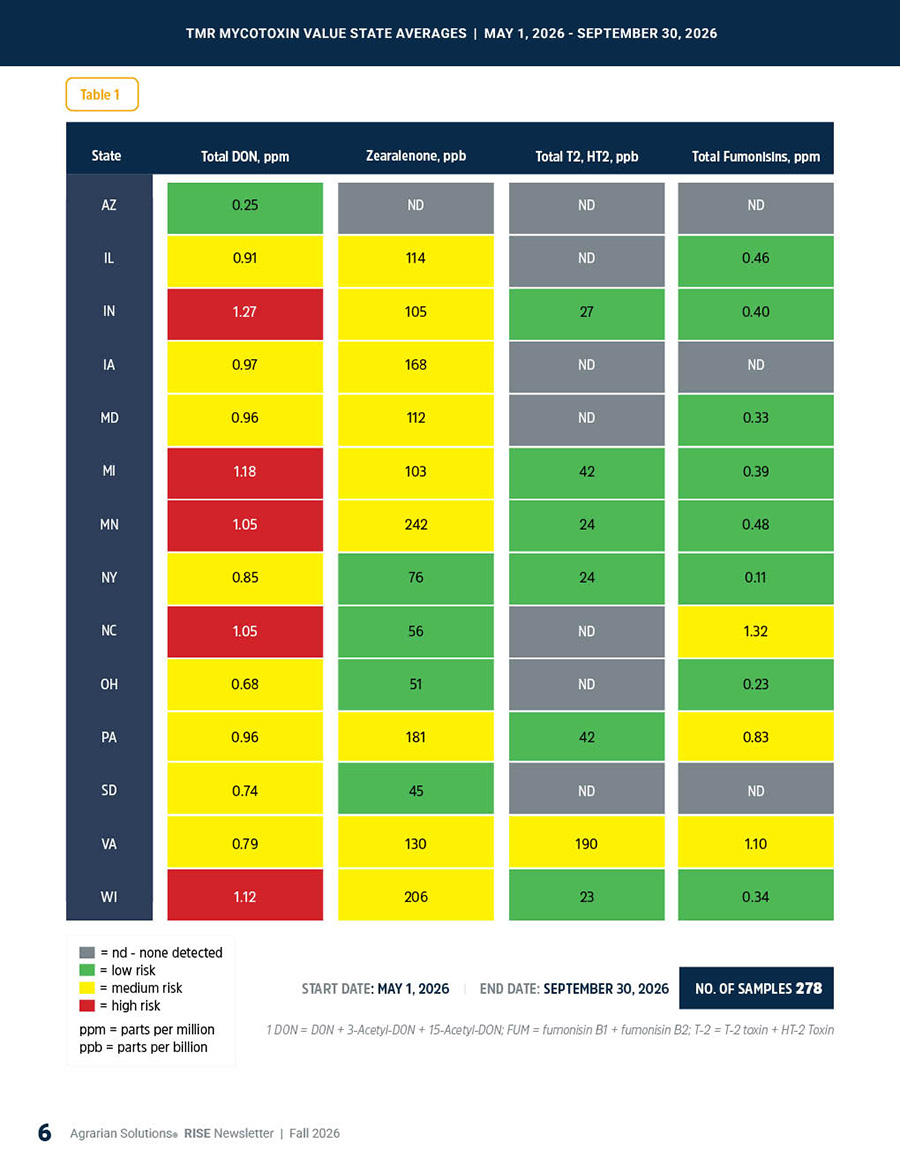
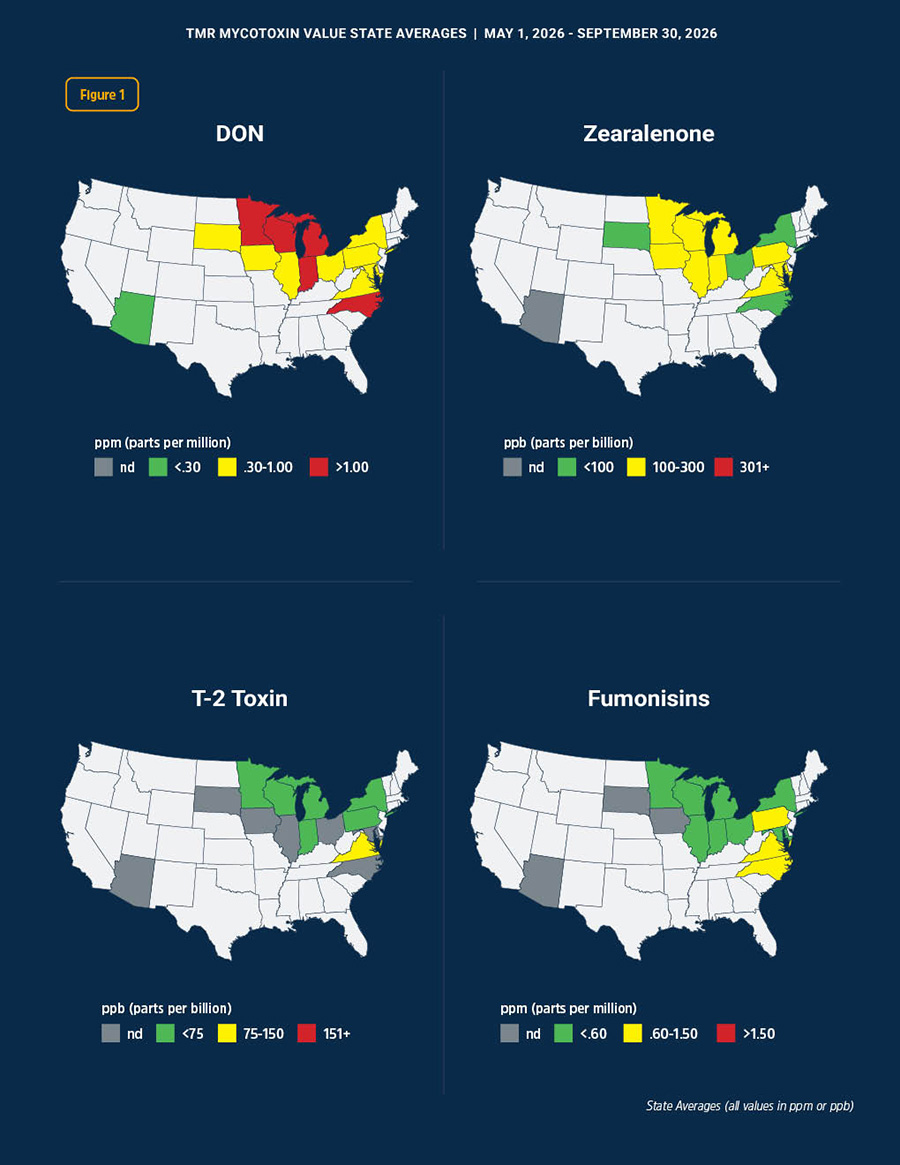
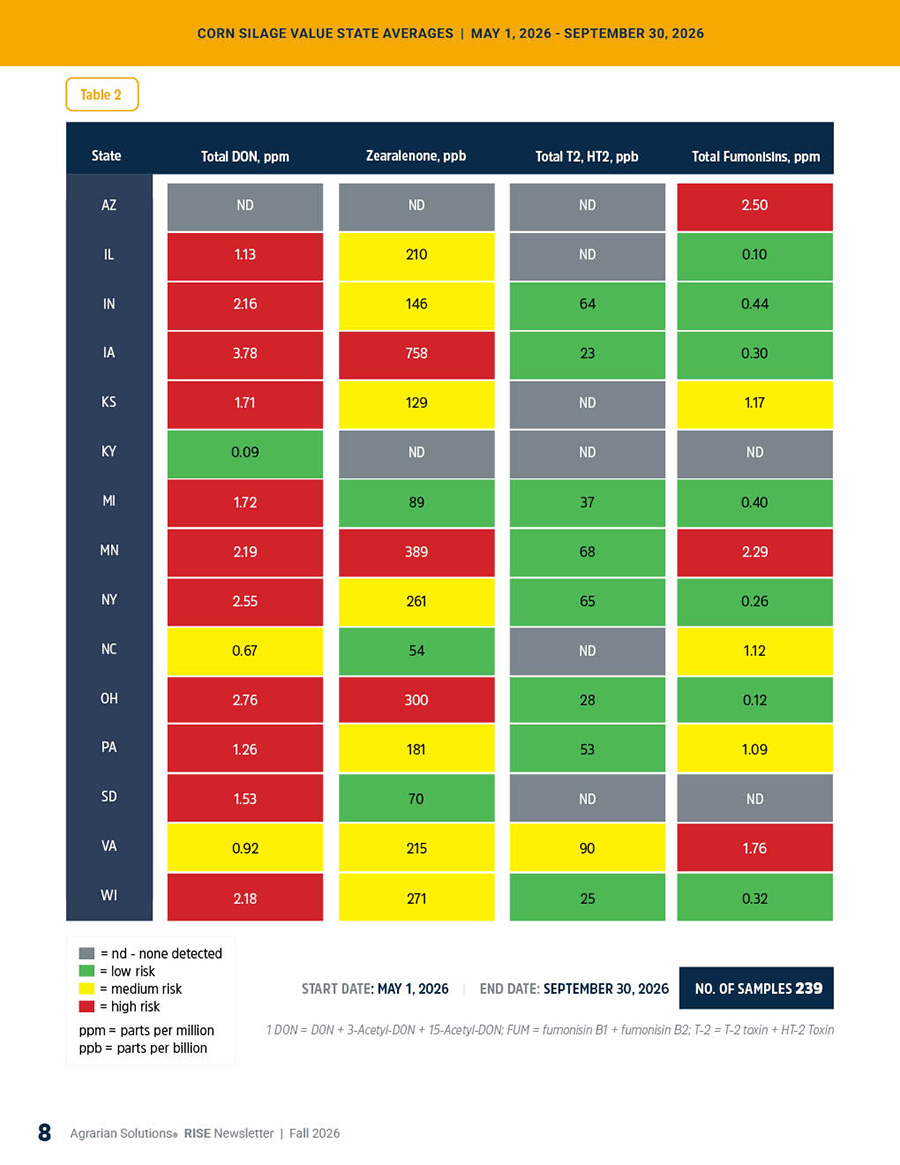
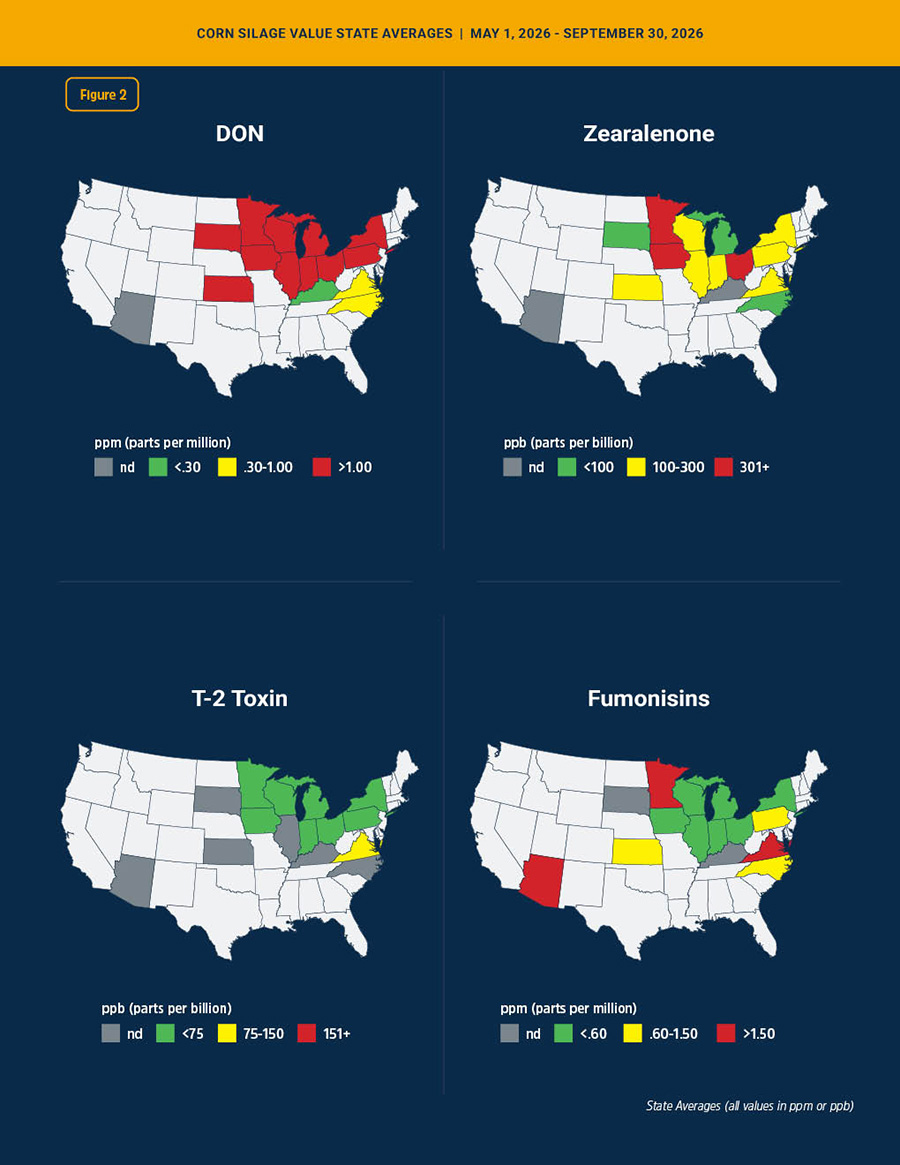
During Summer and Fall 2026, 95% of all corn silage samples had multiple mycotoxins, and almost every state posted corn silage samples with DON at a high-risk level. Co-exposure to more than one mycotoxin puts additional stress on animals beyond the single mycotoxin challenges. DON harms intestinal cells, allowing other mycotoxins to breach the body’s defenses. It is troubling to see the highly toxic T2/HT2 appear more consistently. Even very minor levels of T2/HT2, combined with high levels of DON, pose significant health challenges for the animal. Feeds with multiple mycotoxins at medium risk contaminations may pose greater consequences than feeds with a single mycotoxin at a high-risk concentration.
Corn silage samples from Iowa, Minnesota, and Wisconsin were at high-risk contamination levels for DON and zearalenone during the survey period, with fumonisin averaging in the high-risk contamination level for Minnesota samples. The corn silage high-risk mycotoxin contamination levels directly translated to high TMR mycotoxin concentrations of DON and medium-risk concentrations of zearalenone. The TMR samples were also contaminated with fumonisin and T2/HT2, but at low-risk levels.
Corn silage samples in Ohio, Michigan, and Indiana continued the trend of high-risk DON contamination. The corn silage samples also contained multiple mycotoxins, with T2/HT2 and fumonisin present in these samples but at low-risk levels. Ohio corn silage samples exhibited high zearalenone contamination, but zearalenone was at a medium-risk level in Michigan and low contamination concentration in Indiana. The TMR samples in Michigan and Indiana are similar for high DON contamination, medium-risk zearalenone, and low-risk T2/HT2 and fumonisin concentrations. The Ohio TMR samples averaged a medium-risk level for DON, and low contamination concentration for zearalenone, T2/HT2 and fumonisin.
The Atlantic states, especially Virginia, exhibited a reprieve from 2024’s extremely high-mycotoxin contamination, yet samples still contained multiple mycotoxins. Corn silage from Virginia averaged in the medium-risk contamination category for aflatoxin, DON, zearalenone, and T2/HT2, and high-risk level for fumonisin. Aflatoxin was detected consistently in areas of Virginia experiencing drought-stressed corn. Corn silage in North Carolina fared better and was medium-risk levels for DON and fumonisin and low risk for zearalenone. TMR samples from North Carolina were high-risk levels for DON, indicating feed ingredients other than corn silage are sources of DON, medium-risk contributors for fumonisin and low-risk sources for zearalenone. The TMR samples from Virginia tested at medium-risk contamination concentrations for DON, zearalenone, T2/HT2, and fumonisin.
Pennsylvania and New York corn silages were contaminated at high-risk levels for DON and also contained a mixture of zearalenone at medium-risk levels and T2/HT2 at low-risk levels. Fumonisin levels were medium-risk in Pennsylvania but dropped to low-risk levels farther north into New York and the Northeast. The TMR samples throughout the Northeast followed this trend with consistent exposure to multiple mycotoxins. Compared to past years the average DON concentration is lower, now at medium-risk concentrations, but when combined with the medium-risk zearalenone and low amounts of T2/HT2 and fumonisin, care should be taken when feeding vulnerable groups of animals such as pre-fresh, fresh, and high cows.
You can depend on the DTX™ technology and phytogenics to defend and protect your cattle against the major mycotoxins whether alone or contaminating the diet in combinations.