
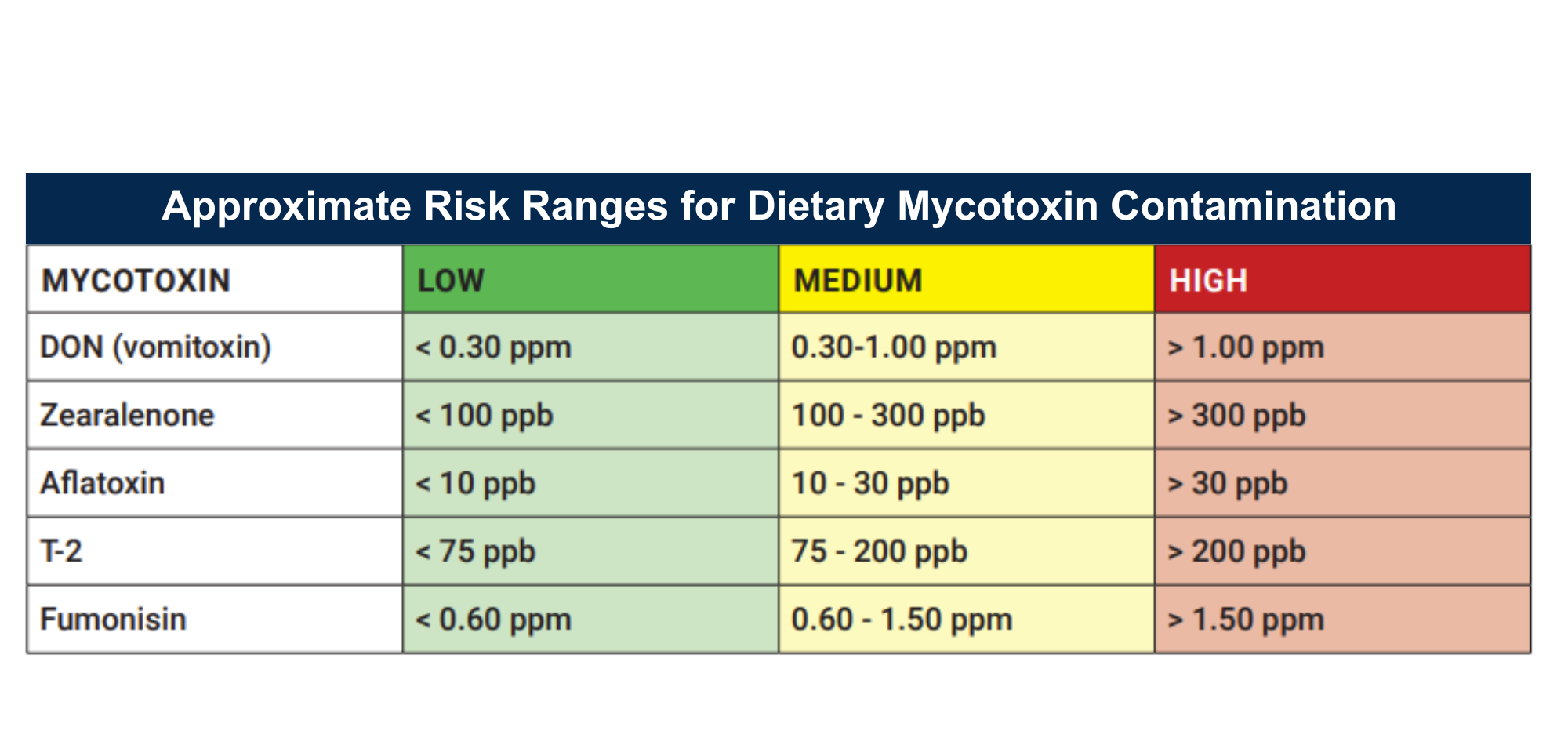
A recent series of episodes on Agrarian Solution’s podcast, Ruminate This, took an extensive look into four of the major mycotoxins we encounter regularly in the US. Understanding how each mycotoxin impacts the animal is important to help us recognize mycotoxin symptoms and to help the animal defend and protect itself against those mycotoxins.
The most common mycotoxin encountered in the US is DON, which can be nicknamed “the rumen disruptor mycotoxin”. The DON, in essence, paralyses ruminal protozoa with an end result of reduced ruminal fermentation. The net result is to lessen total digesta outflow from the rumen and to shift starch and fiber fermentation to the hind gut accounting for the typical erratic manure consistency noted with dietary DON contamination. The tight junctions between intestinal cells are compromised by DON resulting in leaky gut and the ability of mycotoxins and pathogens to enter the body causing systemic inflammation. The liver must detoxify mycotoxins and clear inflammation-associated compounds, as well as process nutrients. Ultimately, “the rumen disruptor mycotoxin” reduces the pool of nutrients absorbed by the cow and reallocates nutrients via inflammation away from milk production and reproduction.
Zearalenone is widely known as the estrogenic mycotoxin, making it a hormone imposter and liver disruptor. Disruptions in hormonal cues can lead to variable heat expression, increased ovarian cysts and pregnant dry cows showing heats. Zearalenone can cause the uterine lining to thicken and conduct other changes in the uterine environment that lead to early embryonic death. The liver views zearalenone as a hormone rather than a toxin, allowing zearalenone to spend more time in the liver than toxins normally would. Zearalenone causes liver damage as the liver attempts to degrade the toxin as if it were a hormone. The resulting stress on the liver leads to tissue damage, inflammation, and a reduction in the ability of the liver to do its main job of glucose production, which in the secondary outcome of reduced glucose availability for the developing embryo, as well as glucose being reallocated to the immune system.
An understated, but vitally important, impact of fumonisin is to shut down immune cell communication making this toxin the communications saboteur. When immune cells are unable to “talk” to each other they cannot recruit new cells to inflammatory sites to protect tissues. The liver loses its antioxidant capabilities leading to decreased immune system function and increase oxidative stress in liver tissues and across the body. Intestinal cells that cannot transmit immune signals eventually die, causing a slow rise in the incidence of leaky gut. Depending on the environment, fumonisin can even contribute to pneumonia incidence by harming immune signaling in the lungs. Fumonison can cause intake swings followed by erratic changes in daily milk production. The liver and immune stress shifts nutrients away from productive purposes and towards the immune system and tissue repair.
The most toxic mycotoxin experienced in the US is T2, better described as the assassin mycotoxin. T2 specializes in shutting down protein synthesis in cells which quickly leads to cell death. This is especially effective in high turnover tissues such as those in the digestive tract, bone marrow, and liver. T2 is usually seen with other mycotoxins and amplifies their negative effects. Digestive tract cells are especially vulnerable; the ability of T2 to kill these cells increases the animal’s susceptibility to other feed issues such as clostridia or Aspergillus fumigatus. There is indirect evidence that T2 increases the lethality of clostridia and HBS cases.
The cow is a complex biological arrangement, and mycotoxins directly target the digestive, immune, and hormonal systems and wreak havoc. Nutrient allocation is shifted towards the immune system to repair damage and away from profitable purposes. By utilizing a biological approach that has broad protection against many mycotoxins without the limitations of binders we can work with the cow’s defensive systems. DTX Concentrate helps the cow defend and protect herself against mycotoxins, letting the cow be a cow and use nutrients for productive, profitable purposes.
Authors: Caroline Knoblock, MSc, – Director of Nutrition, Agrarian Solutions and Larry Roth, Ph.D., PAS – Vice President of Nutrition
