
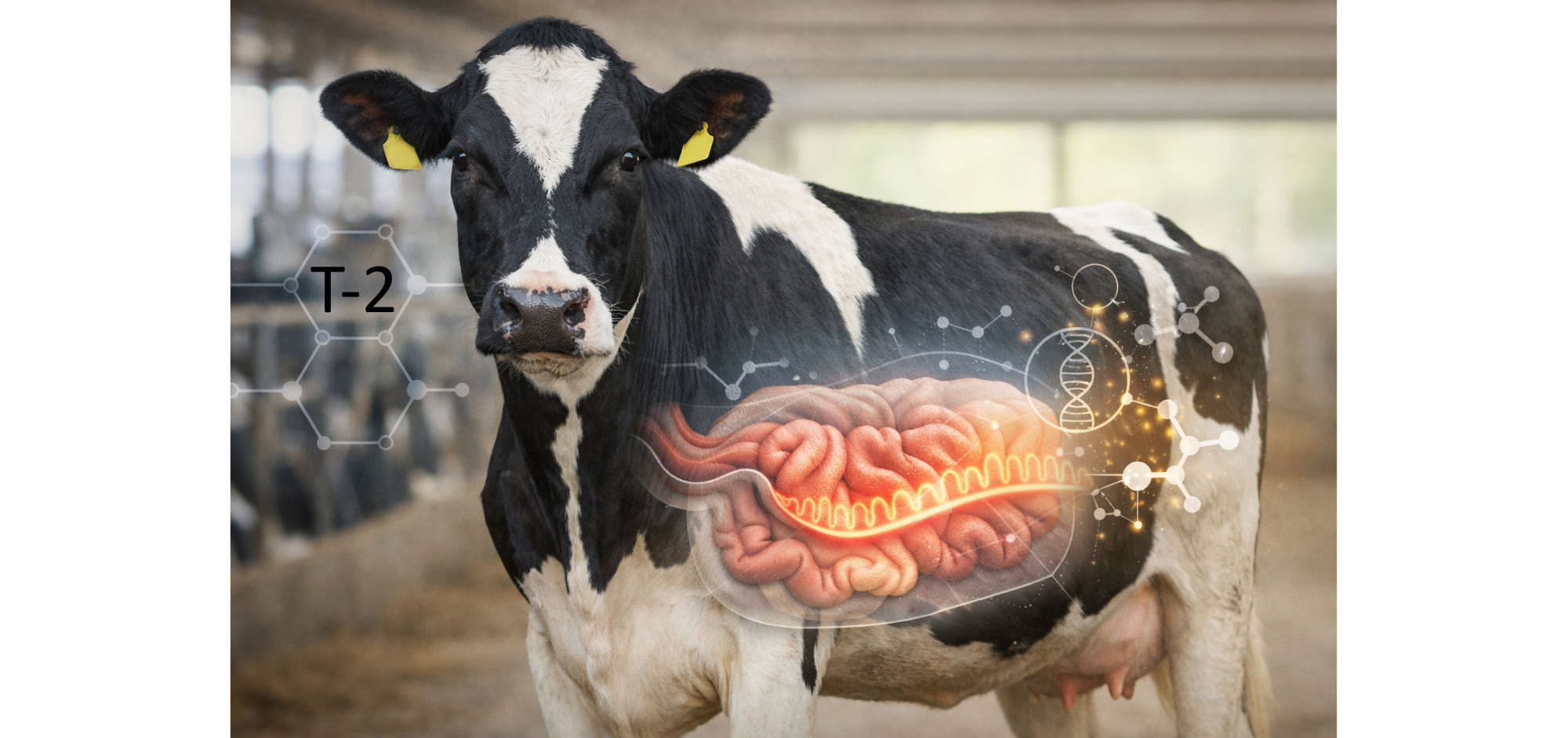
Current thought is to protect cows from Hemorrhagic Bowel Syndrome (HBS) by strengthening a healthy immune system and employing sound feed hygiene control with an emphasis on Aspergillus fumigatus. Routine feed testing for T-2 mycotoxin contamination should be included in the feed hygiene practices.
Approximately 80% of HBS cases coincide with the incidence of the Aspergillus fumigatus mold in the digestive tract of necropsied cattle, and Clostridium perfringens Type A contamination is often cited as a potential factor 1 Reviewing the typical HBS symptoms (a sudden onset of bloody diarrhea hitting the highest producing cows leading to rapid decline and death, and then post-mortem finding of bloody intestines with clotting) may implicate another potential HBS factor.
While a range of mycotoxins are toxic to intestinal cells, T-2 and its metabolite HT2, are particularly destructive to the digestive tract lining. Ruminal microorganisms cannot detoxify T-2 in the diet; whatever amount of T-2 is ingested passes through to the intestines where it enacts much of its damage.
Mycotoxins that harm the digestive tract (DON and especially T-2/HT2) create a break in the castle wall of the digestive tract that allow other harmful pathogens through. The pathogen Clostridia perfringens Type A is considered a factor in HBS; if T-2 can break down the defenses it is creating a pathway for Clostridia or Aspergillus fumigatus to invade and cause harm to the digestive tract. The combination of T-2, Clostridia and Aspergillus fumigatus constitutes a lethal trio for destroying the digestive tract.
There are no direct research studies implicating mycotoxins as a factor in HBS, but we can theorize that some cases may be due to mycotoxins destroying intestinal cells and allowing other harmful pathogens access to the digestive tract cells to cause damage. When normal measures against HBS do not work it is important to explore other avenues.
Due to the size and structure of T-2, the toxin is poorly bound by clays or yeast cell wall products and, consequently, can destroy the digestive tract lining despite including these products in animal diets2. There are no feed enzyme-type products offering research-proven effectiveness against T-2. Field experience indicates that DTX is one of the only feed products providing protection against the T-2 mycotoxin.
Certainly, mycotoxins and T-2 cannot be implicated in all cases of HBS, but there is indirect evidence that a portion may be attributed to intestinal damage caused by T-2. Routine TMR sampling for mycotoxins can indicate when to include DTX in the TMR to protect the digestive tract against T-2 destruction. Contact your Agrarian Representative for advice on implementing the DTX technology for defending and protecting the intestinal tract from mycotoxins and to enable healthier, more productive cattle.
Authors: Caroline Knoblock, MSc, – Director of Nutrition, Agrarian Solutions and Larry Roth, Ph.D., PAS – Vice President of Nutrition
References: 1Sockett et al., 2004. Proc. Am. Assoc. Vet. Lab. Diagnos. 36. • 2Kihal et al., 2022. J. Anim. Sci. 100:1-14.
