The DON and Zearalenone Challenges Continue
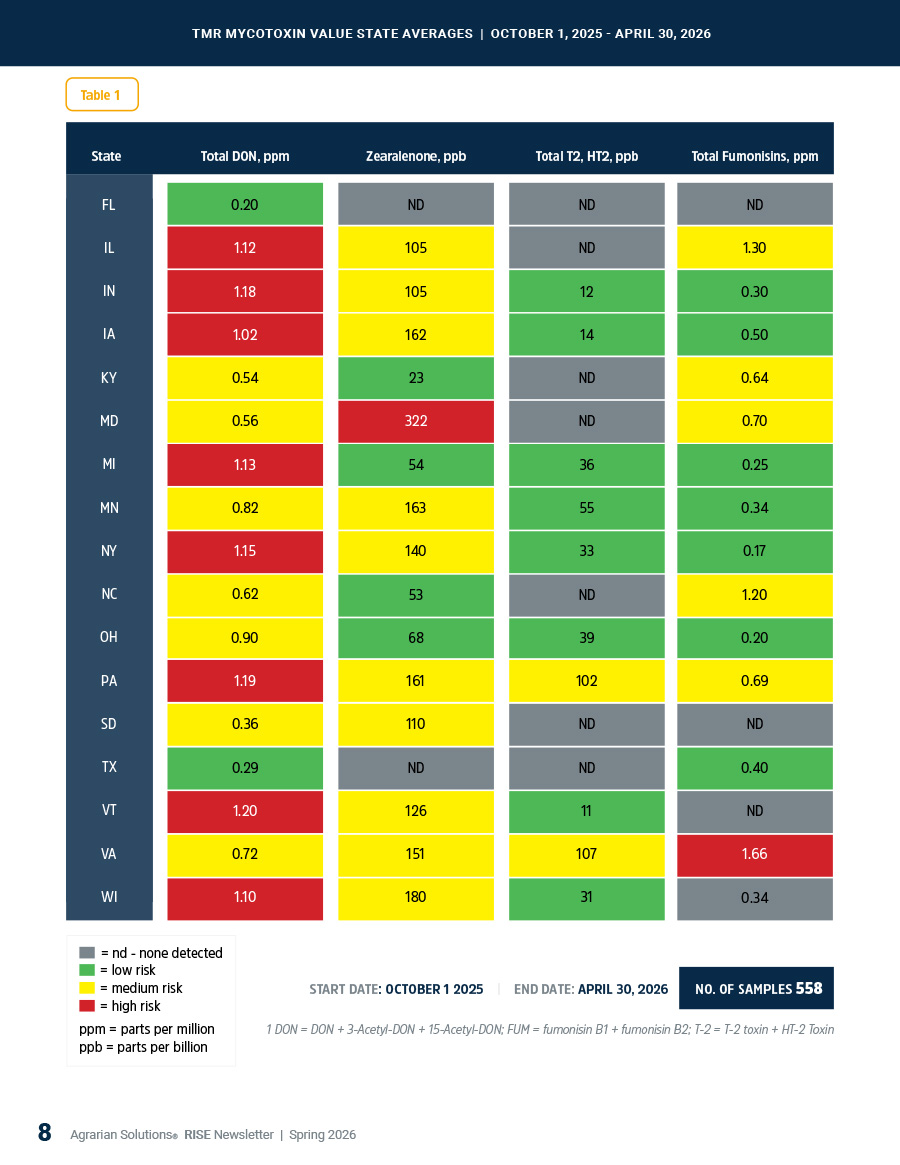
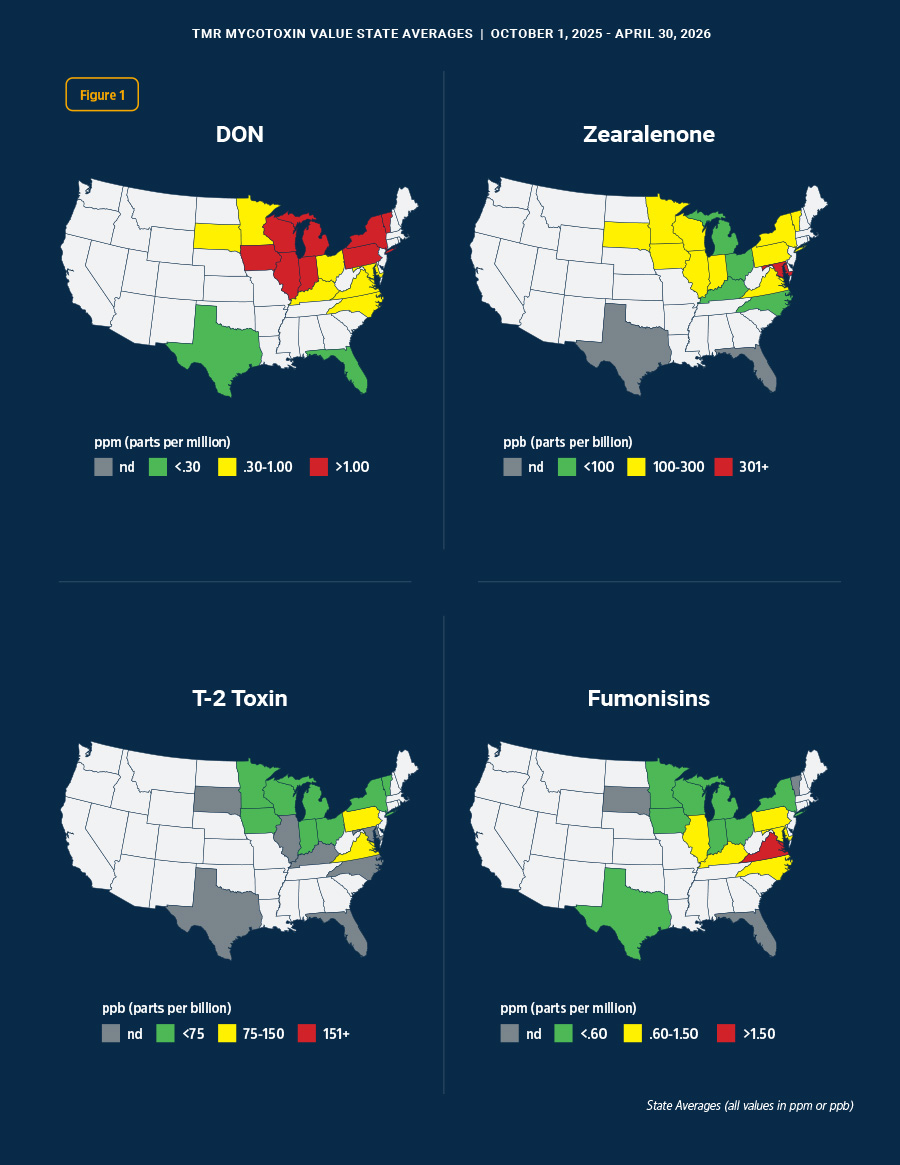
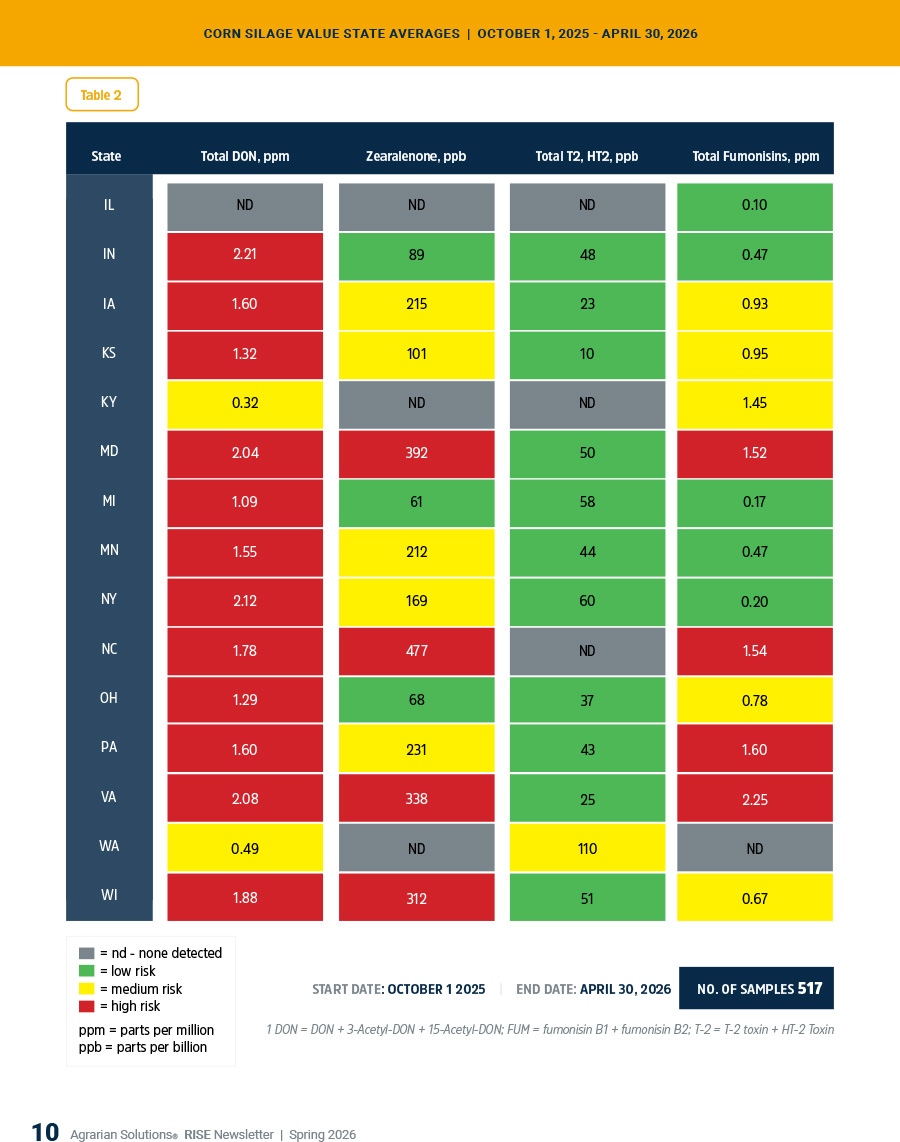
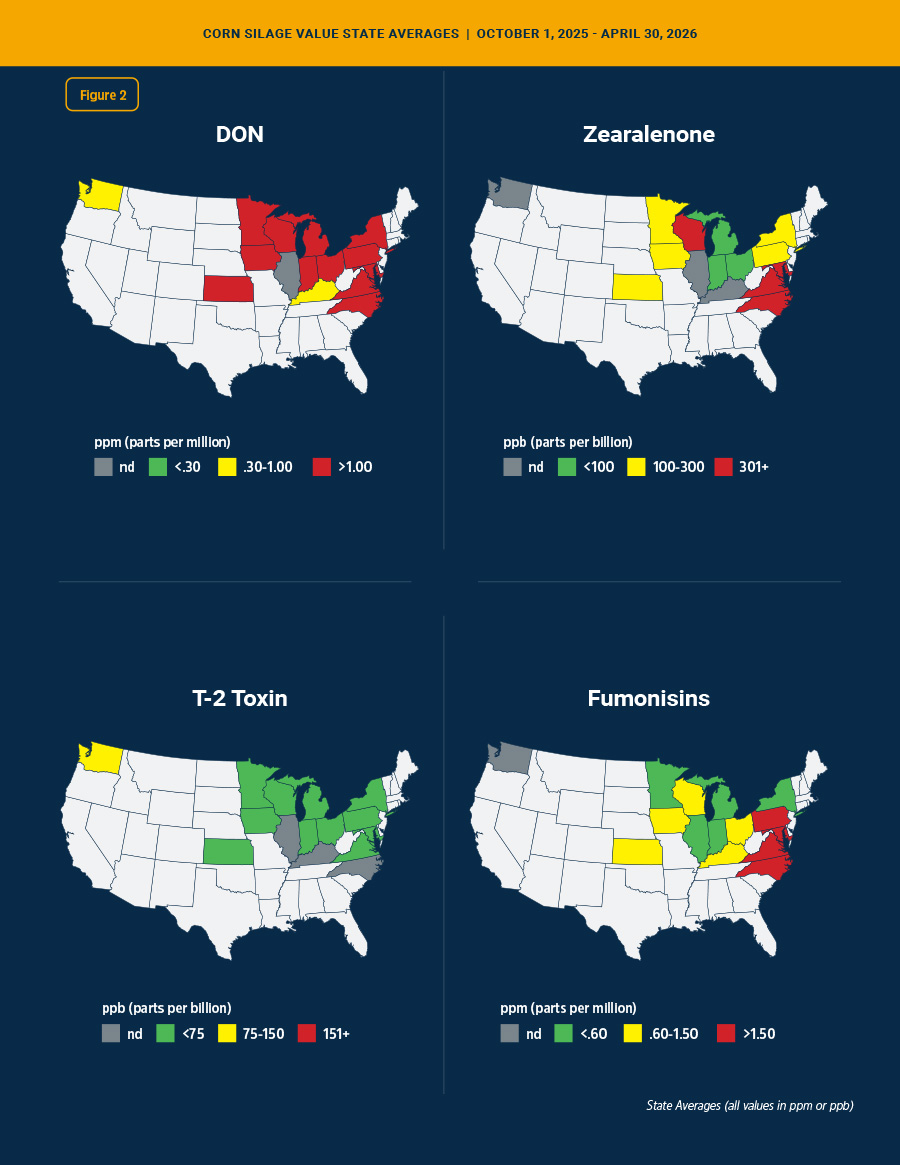
The mycotoxin assay summaries presented in Table 1 and 2 and Figures 1 and 2 for the 517 corn silage and 558 TMR samples collected between October 1, 2025 and April 30, 2026 indicate a high number of samples contaminated by two to four mycotoxins. The frequency of multiple mycotoxin-contaminated samples and the compounding effects supports the regular sampling of feed ingredients and diets, as well as the adaption of time-proven and research-verified mycotoxin mitigation protection.
Corn silage samples continue exhibiting the familiar pattern of high-risk DON contamination and medium-risk zearalenone (ZEA) levels observed in recent years. However, elevated fumonisin (FUM) levels are being detected. Samples from Maryland, North Carolina, Pennsylvania, and Virginia exhibited high-risk levels of FUM, while an additional five Midwestern states reported medium-risk FUM contamination.
The TMR contamination levels of DON were in the high-risk category for eight states and 11 states were at a high- or medium-risk level of ZEA. As expected from the corn silage FUM results, 14 states assayed low- and medium-risk levels of FUM in the TMR. More importantly than evaluating individual mycotoxin levels is to note that 11 states submitted TMR samples testing at medium- or high-risk levels for two or three mycotoxins, and Pennsylvania and Virginia assayed medium- or high-risk contamination levels for four mycotoxins.
The presence of multiple mycotoxins exacerbates the digestive, immune, and reproductive insults of the individual mycotoxins and necessitates a proven mycotoxin mitigation program. For example, DON disrupts digestive function, ZEA reduces reproductive success by imitating estrogen, FUM accelerates leaky gut and reduces liver function, and finally T-2 earns the “assassin” nickname by killing high-turnover gut and immune cells.
The production response observed in high-producing dairy cows supplemented with DTX™ in Roth et al. (2024a,b) occurred when diets tested at high-risk DON levels and medium-risk ZEA levels. Dairy nutritionists and producers are observing very good milk production and reproductive success outcomes when feeding DTX consuming diets with multiple mycotoxins at medium- and high-risk levels. Contact your Agrarian Solutions representative for advice on developing a mycotoxin testing program and utilizing DTX in your clients’ herds.
aRoth, L.D., et al. 2024. J. Dairy Sci. 107(Suppl 1):426. (Abstr.)
bRoth, L.D., et al. 2024. J. Dairy Sci. 107(Suppl 1):426. (Abstr.)