
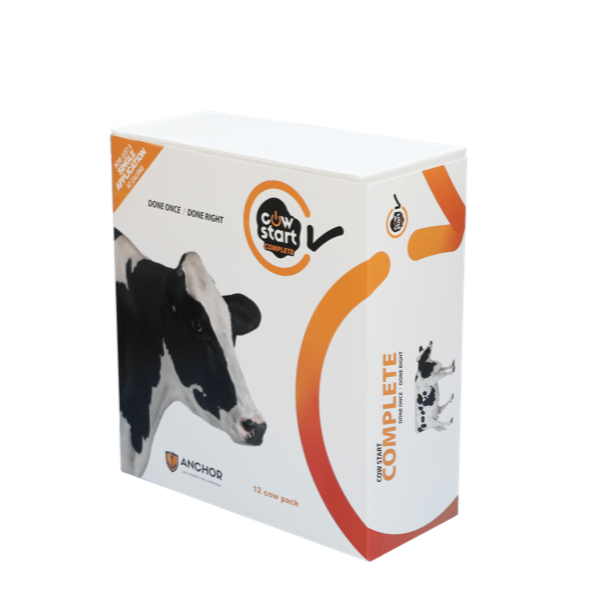
Cow Start™ Complete Bolus

$240.00
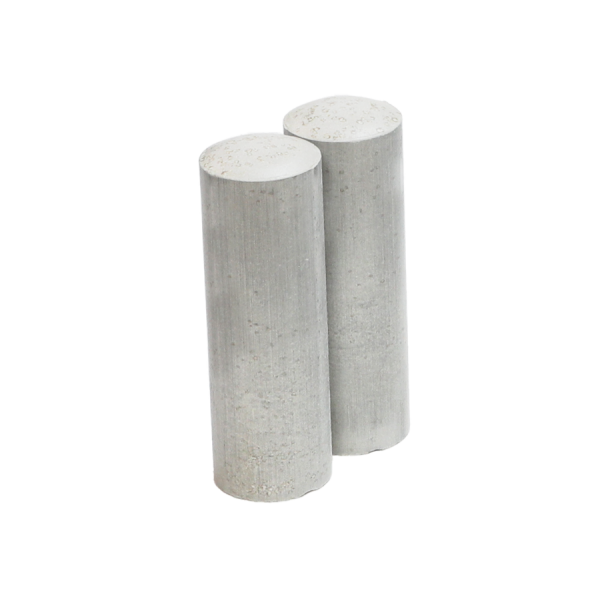
Provides key nutrients and factors to resolve calving-associated inflammation. Research indicates enhanced health, production, and reproduction. Also replaces Ca sources provided at freshening. Provide 2 Cow Start Complete boluses at calving to cows entering their second lactation or greater. Provide 1 Cow Start Complete bolus at calving to heifers entering their first lactation.
- Box of 24 boluses to supply 12 cows (2 boluses per cow)
Please note that this product does not include the bolus applicator gun.
Done Once/Done Right
Provides key nutrients and factors to resolve calving-associated inflammation. Research indicates enhanced health, production, and reproduction. Also replaces Ca sources provided at freshening.
Use Directions
Provide 2 Cow Start Complete boluses at calving to cows entering their second lactation or greater. Provide 1 Cow Start Complete bolus at calving to heifers entering their first lactation. Do not need to administer a second time.
Ingredients & Analysis
Ingredients
Seaweed derived calcium, calcium chloride, calcium carbonate, sorbitol, calcium hydroxide, magnesium oxide, magnesium oxide, magnesium stearate, vitamin E, selenium yeast, vitamin D3
Guaranteed Analysis
Calcium (min) 53 grams per bolus
Vitamin D3 40,000 I.U. per bolus
Magnesium (min) 3.3 grams per bolus
Selenium (min) 1ppm
Vitamin E 250 IU per bolus
Packaging & Stability
24 boluses per box
Stable for 2 years, store in a cool, dry area. Keep in foil packaging until immediately before use.
Cow Start™ Complete
The Next Generation Transition Cow Bolus
16.7% Improvement in Confirmed Pregnancy Rate at First Service
72% pregnant at 100 DIM
A greater proportion of cows given Cow Start Complete were pregnant at 100 days in milk compared to the control (55%)
+5.3 lbs/day Milk Increase and 5.2:1 ROI
Cows supplemented with Cow Start™ Complete produced +5.3 pounds more milk per day over 100 days.
First-Lactation
Second and Greater Lactation

Cow Start™ Complete FAQ’s
About Cow Start™ Complete
What is Cow Start™ Complete?
What problem does it actually solve?
Every cow mounts an inflammatory response at calving. When that response resolves quickly, she eats, she milks, and she cycles. When it does not, intake falls first, and the metabolic problems follow — the slow-starting fresh cow, the lingering uterine discharge near breeding at the herd check, the cow who will not settle.
Cow Start Complete is built to help her resolve that inflammation rather than to treat one symptom downstream of it.
Is Cow Start Complete a milk fever product?
No, it goes beyond calcium needs. In our commercial dairy trial, cows given Cow Start Complete had the same blood calcium as cows given two competing calcium products together — both groups normocalcemic — and the Cow Start Complete cows still produced more milk and got pregnant faster.
The report puts it plainly: Cow Start Complete replaces calcium products and does much more. Because blood calcium was the same in both groups, every other difference in the trial came from something other than calcium. The advantage was better inflammation resolution and faster recovery
How does it work?
Cow Start Complete works through inflammation resolution rather than through calcium delivery. The seaweed-derived mineral source supplies 70+ minerals and trace minerals that act as co-factors across a range of physiological functions; published work in both humans and transition cows associates this source with lower levels of the inflammation markers SAA, TNF-alpha, and IL-6. Vitamin E and selenium yeast support immune
function alongside it.
In the trial, this response showed up in three ways a dairy can actually see: the Cow Start Complete cows ruminated more in the first two weeks (488 versus 473 minutes a day), they lost roughly half as much body condition over the first twelve weeks, and they milked 5.3 lb a day more through 100 days.
What makes it different from other fresh cow products?
Most fresh cow products are yeast based products designed to stimulate feed intake. Cow Start Complete provides real nutrients immediately and starts by resolving inflammation, which is why it was tested head-to-head against two competing products used together rather than against an untreated group — and why it is the only at-calving bolus with published first-lactation heifer research behind it.
First-lactation heifers
Should first-lactation heifers get Cow Start Complete?
Yes, they should get one bolus, and they are the group most dairies overlook. Research on 248 first-lactation Holstein heifers across two commercial dairies found meaningful improvements in uterine recovery and reproductive performance from a single bolus at calving.
My heifers don’t get milk fever. Why would I bolus them?
Because milk fever was never their problem. In that research, there were zero cases of clinical milk fever in any group at either farm, and Cow Start Complete still cut uterine infections and improved reproduction.
A first-calf heifer faces roughly twice the dystocia rate of a mature cow, her first high-energy lactation diet, and social and udder stress in the fresh pen. All of that is inflammation. In a heifer, it does not show up as a down cow — it shows up seven days later as metritis or endometritis, and ninety days later as an open heifer.
What did the first-lactation research show?
248 first-lactation Holstein heifers on two commercial dairies, one bolus at calving compared with the standard practice of no bolus:
- Uterine infection fell from 10.3% to 0% at Farm A and from 17% to 6% at Farm B
- Ov-Synch use fell from 33% to 6% at Farm B, the farm where it was recorded
- Heifers pregnant after two services rose from 55% to 84% at Farm A
- Days to conception shortened at both farms — 95 to 87 days, and 98 to 94 days
- Milk production through the first 100 days was numerically higher at both farms, though the difference was not statistically significant
How many boluses does a first-lactation heifer get?
One bolus at calving. Mature cows receive two at calving.
How quickly will I know whether it worked?
Faster than with any other transition product. In the research, uterine recovery was scored by each farm’s own veterinarian at day 7 and day 9 after calving.
Split your heifer pen and treat every other heifer, then have your veterinarian score them at the next herd check. You will have an answer in about a week, rather than waiting on a hundred-day milk curve.
Which herds see the biggest response in heifers?
Both research farms were selected because they had persistent problems with uterine recovery and fertility in first-lactation heifers, so herds with a known heifer problem should expect the largest response. Herds whose heifer reproduction is already excellent should expect a smaller one.
Worth checking before you start: heifer dystocia rate, fresh-heifer metritis, Ov-Synch use in first-calf heifers, and how many first-lactation animals you cull open.
Dosing and administration
When should Cow Start Complete be given?
At calving. Once. There is no second administration and no pre-fresh feeding period to manage.
How is it administered?
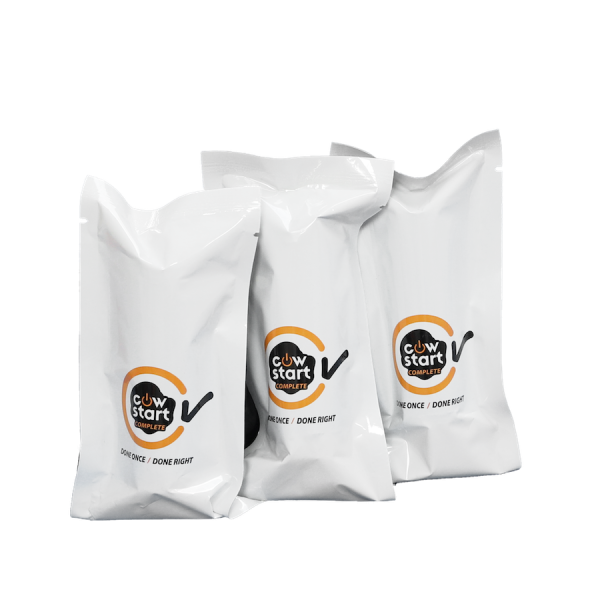
Orally, with a bolus applicator. Each bolus is individually foil-wrapped — leave it in the foil until immediately before use. The applicator is sold separately.
How is it packaged, and how long does it keep?
Twenty-four boluses per box. At the two-bolus mature-cow dose that is twelve cows per box. Stable for two years stored in a cool, dry place, in the foil until use.
Formulation
What is in Cow Start Complete?
Seaweed-derived calcium, calcium chloride, calcium carbonate, calcium hydroxide, magnesium oxide, magnesium stearate, sorbitol, vitamin E, vitamin D3 and selenium yeast. The seaweed-derived source — calcified marine algae
— also supplies 70+ trace minerals.
Guaranteed analysis per bolus: calcium 53 g minimum, magnesium 3.3 g minimum, vitamin D3 40,000 IU, vitamin E 250 IU, selenium 1 ppm minimum.
What calcium sources does it use?
Four: seaweed-derived calcium, calcium chloride, calcium carbonate and calcium hydroxide. Together, they give both rapid availability and sustained release.
Calcium supports the real demands of early lactation. It is not the mechanism behind the production and reproduction results — see the question on milk fever above.