
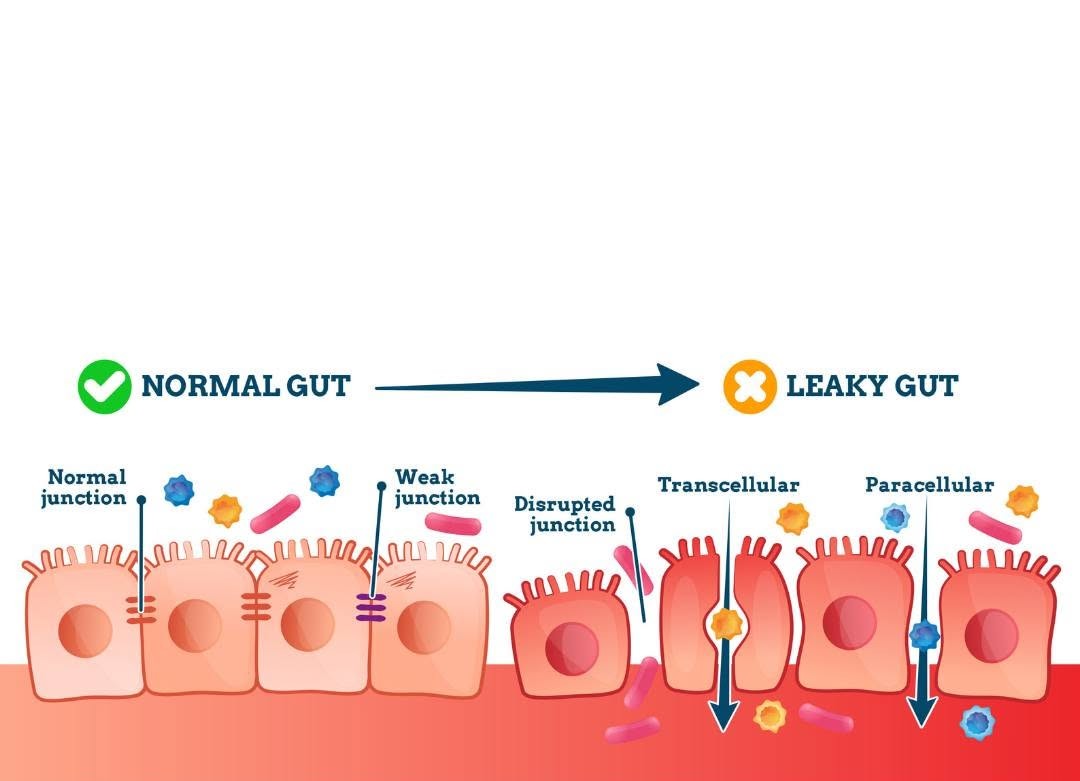
The digestive tract lining can be likened to a castle wall serving as the first line of defense between the outside world’s pathogens, mycotoxins, and digesta and the animal’s body (image above). Several key components make up the gut lining to keep the digestive tract healthy; however, this article’s focus is on the lining’s epithelial cells and the tight junction proteins holding the cells closely together.
The small and large intestine linings are singular cell layers separating the digesta contents and the bloodstream. The epithelial cell layer is responsible for absorbing nutrients and keeping pathogens in the digestive tract and out of the body. The intestinal mucous layer is a chemical barrier protecting against pathogens. The physical barrier at the intestinal lining consists primarily of two parts: the digestive tract lining cells themselves and the tight junction proteins tightly holding the cells together.
Unfortunately, destruction of the individual digestive tract lining cells creates holes in the castle wall. Tight junctions may fail to renew themselves, thereby creating a gap between digestive tract lining cells. Either failure of the physical barrier leaves a way for mycotoxins, pathogens, and digesta to enter the bloodstream for distribution throughout the body.
During heat stress, high-producing dairy cows naturally reduce feed intake which reduces the heat load of digestion. Increasing the blood flow to the skin dissipates heat, which decreases blood flow to the digestive tract and reproductive system. Reducing water intake and decreasing blood flow to the digestive tract results in the shrinking of the cells lining the gut, thereby stretching the tight junctions attempting to connect the gut lining cells. Consequently, the physical barrier created by the linked tight junctions fails. The shrunken cells are also weaker and more susceptible to damage and cell death.
Mycotoxins, especially DON and T2/HT2, are specialists at disrupting the castle wall of the digestive tract. They are potent digestive tract cell killers and tight junction disruptors. Their main action is to turn off protein synthesis, stopping the renewal of tight junction proteins and leading to broken junctions between cells. Within the cell, shutting down protein synthesis quickly leads to cell death and a loss of the digestive tract cell, thus creating a hole in the castle wall.
The simultaneous occurrence of heat stress and mycotoxins creates a cascade of havoc for animals by decreasing feed intake, leaving fewer nutrients available for normal functions, and resolving the inflammation associated with digestive tract damage, which eventually results in fewer nutrients available for milk production and reproduction. During hot weather, this challenge may intensify because poorly and improperly stored feeds are at risk of mold growth, increasing the risk of mycotoxin production in storage.
DTX™ Concentrate is specifically designed to protect the digestive tract during stressful situations such as summer heat stress and mycotoxin contamination. Agrarian’s proprietary bacteria technology upregulates the natural defenses of the digestive tract cells, enabling the protection from damage. The plant phytogenics curcumin and naringin work together to support tight junction protein renewal for protecting the tight junctions from damage. The combination of microbial and phytogenic technologies protects cows from digestive tract disruption, thus reducing inflammation and the associated nutrient costs. Consequently, nutrients can be allocated to productive purposes making milk, getting, and staying pregnant.
Authors: Caroline Knoblock, MSc, – Director of Nutrition, Agrarian Solutions and Larry Roth, Ph.D., PAS – Vice President of Nutrition
